|
| HOME |
| SUNDIAL |
| SITE |
| THE PROJECT |
| MY DIAL |
| FUNDRAISING |
| LINKS |
|

|
| Dial Plate |
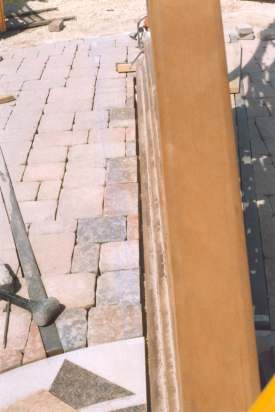 |
The blue
chalk lines used to indicate where the pavers are to be cut
are visible here. The rail for this hour line came so close to
the gnomon that the lower web actually goes under the gnomon.
The gap along the gnomon is about 1 inch wide and is the passage to the underground drainage system. This space was filled with small stone pebbles. |
|
|
|
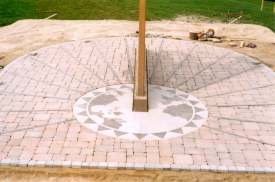
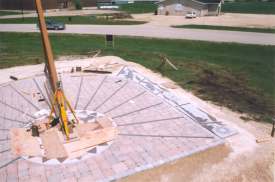
| All the
inner dial rails are in place. The pavers and the rails were
all compacted to set them. The grey border pavers are also in
place.
It was now time to start the outer dial. |
 |
|
|
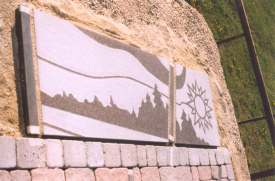 |
The base for the outer dial was first elevated to level required for the rails. The rails were surveyed into position and then the base was elevated for the granite tiles. The tiles were put in place and the space around them filled with limestone. |
|
|
|
| The wood templates were used to protect the granite tiles and sand base from damage when positioning the tiles between the rails. Some of the pieces were quite heavy and required care when placing. | 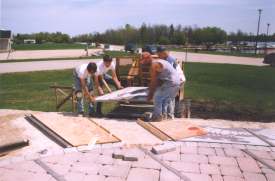 |
|
|
 |
A number of granite tiles are shown here on the east side of the dial plate. Barrie's theodolite is set to survey the hour lines between 6:00 am and noon. Barrie constructed a special stand to help place the tripod securely in any of three positions; east centre, west centre and centre. |